The Truth About Bundling
"Bundle and Save" is the oldest slogan in the book. But does the math actually hold up?
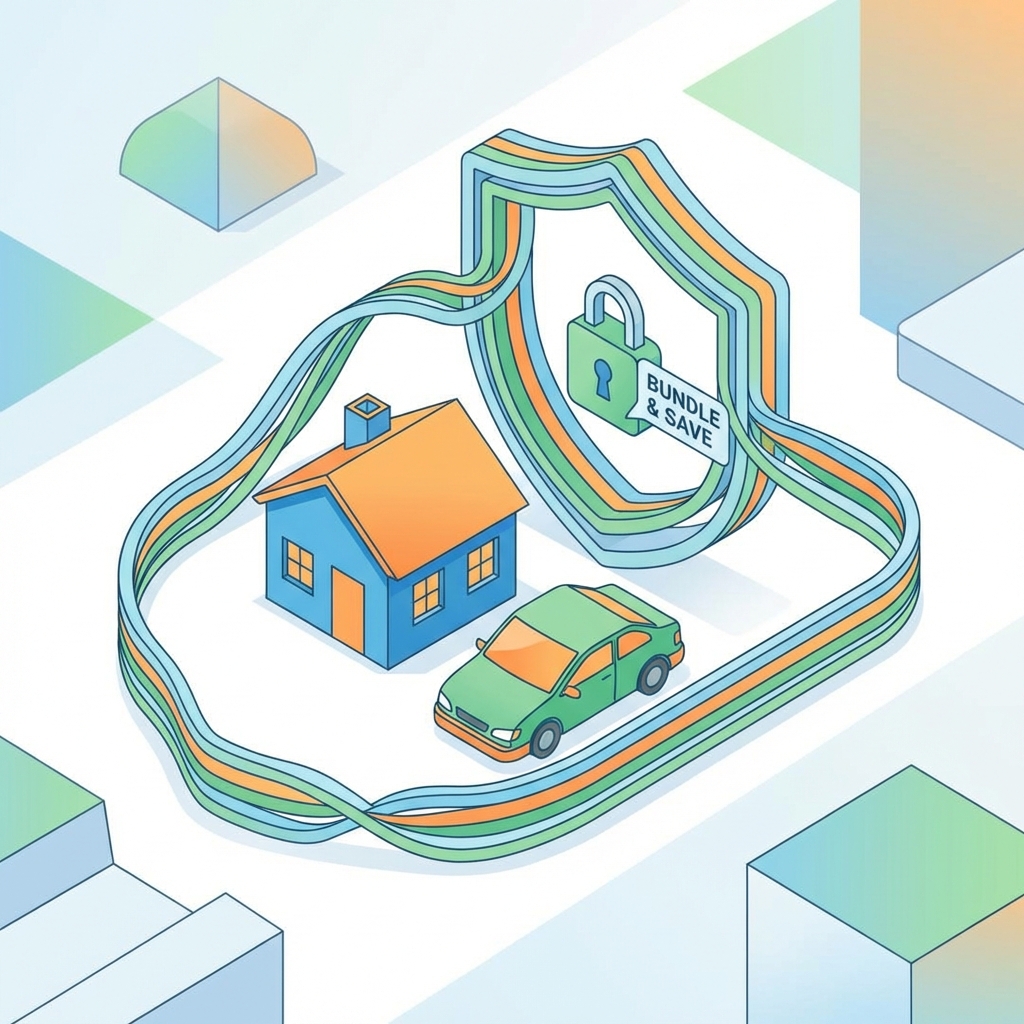
If you have watched TV in the last decade, you have heard the pitch: "Bundle your home and auto insurance and save!" It sounds like a no-brainer. You put all your policies with one company, they give you a discount, and everyone goes home happy. Convenience plus savings, right?
Usually, yes. But not always. In fact, for certain drivers, bundling can actually cost you more money in the long run. In this deep dive, we are going to look at the real numbers behind multi-policy discounts, the hidden "gotchas" that agents won't tell you, and when you should absolutely keep your policies separate.
1. How the "Multi-Line Discount" Works
Insurance companies love bundling because it makes you "sticky." If you have your car, house, and boat insured with them, you are statistically far less likely to switch carriers. It's a retention strategy.
To incentivize this, they offer a Multi-Line Discount. This typically ranges from 10% to 25% off each policy.
The Math: Why It Looks Good
Scenario A (Separate):
Auto Policy (Company A): $1,500/year
Home Policy (Company B): $1,200/year
Total: $2,700/year
Scenario B (Bundled with Company A):
Auto (w/ 15% discount): $1,275
Home (w/ 20% discount): $960
Total: $2,235/year
Savings: $465/year
2. The "Single Deductible" Advantage
Beyond the premium savings, there is another huge perk: the Single Loss Deductible.
Imagine a massive hailstorm hits your town. It destroys your roof ($10,000 damage) and dents your
car ($4,000 damage).
If Separate: You pay your Home Deductible ($1,000) AND your Auto Deductible
($500). Total out of pocket: $1,500.
If Bundled: Many carriers allow you to pay just ONE deductible (the higher
of the two) for the entire event. Total out of pocket: $1,000. You just saved $500 instantly.
3. When Bundling is a BAD Idea
This is the part most guides skip. There are three specific scenarios where bundling is a financial trap.
Scenario #1: The "High Risk" Driver
Some major carriers (like State Farm or Allstate) are conservative. They want "preferred" customers. If you have a DUI or multiple speeding tickets, their auto rates for you will be astronomical—often double what a specialized "high-risk" carrier would charge.
Even with a 20% bundling discount, if their base auto rate is $3,000 (vs. $1,500 at a high-risk carrier), you are losing money. It is cheaper to keep your home with the big carrier and move your car to a non-standard company.
Scenario #2: The Coastal Homeowner
If you live in Florida, Louisiana, or California, home insurance is a nightmare. Many national carriers have stopped writing new home policies in these areas due to hurricane/wildfire risk.
You might be forced to get home insurance through a state-run pool (like Citizens in FL) or a specialist excess/surplus carrier. These companies often don't sell auto insurance. In this case, you can't bundle. Don't force your auto policy into a sub-par carrier just to chase a nonexistent bundle.
Scenario #3: The "Loyalty Tax"
This is a sneaky algorithm trick. Insurers know that bundled customers rarely switch. So, over time, they may creep your rates up faster than they would for a single-policy customer. They are betting on your laziness. If you have been bundled for 5+ years, you are almost certainly overpaying. Shop around.
4. How to Bundle Correctly
If you decide to bundle, do it right.
- Quote Both Ways: Ask your broker to quote the policies separately AND together. Seeing the breakdown exposes if one policy is overpriced.
- Check for Life Insurance: Adding a small Term Life policy (e.g., $15/month) often triggers an additional 5% discount on your Auto and Home. Sometimes the discount is larger than the cost of the life insurance itself—meaning you get free life insurance!
- Don't Forgot the Umbrella: If you are bundling home and auto, you are the prime candidate for an Umbrella Policy. For ~$200/year, it adds $1 Million in liability protection over both.
Conclusion
For 80% of families, bundling is the smart move. It simplifies your billing, saves you roughly 15-20%, and streamlines claims. But for the other 20%—those with spotty driving records or homes in high-risk zones—blindly bundling is a mistake. As always, the calculator is your best friend. Don't assume; do the math.
Want to Check Your Bundle?
Our tool compares bundled rates vs. separate policies from top providers.
Compare Now