Tracking Apps: Savior or Spy?
They promise massive discounts if you let them track your driving. But do they actually work?
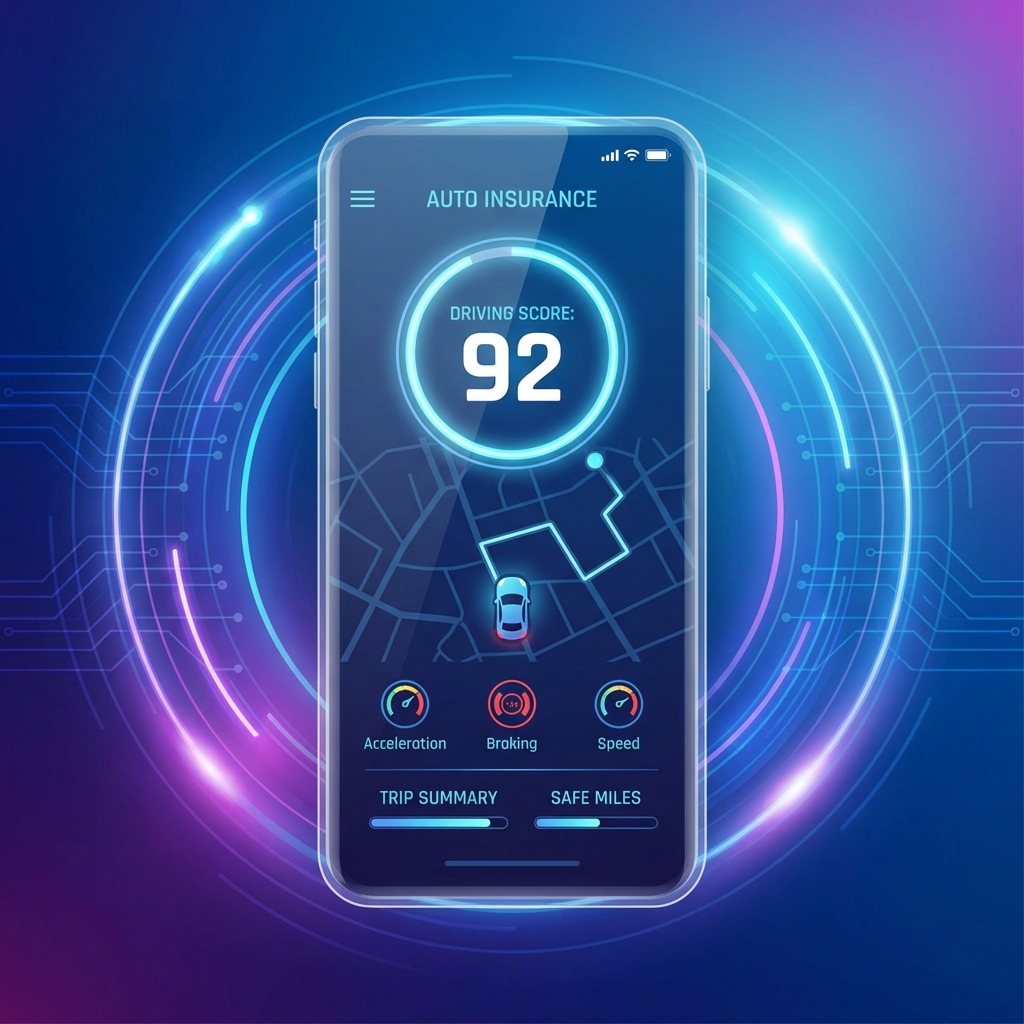
Usage-Based Insurance (UBI) is no longer a niche experiment. It is the future. Every major carrier now has an app that tracks your speed, your braking, and even what time of day you drive. In exchange, they promise discounts of up to 30% or 40%.
But there is a catch. For years, the deal was: "We will track you, and if you drive bad, you just won't get a discount." Now, the rules are changing. Some companies (like Progressive and Geico) admit that your rates can go UP if the app determines you are a risky driver. So, before you install that tracking software, you need to know which apps are friends and which are foes.
1. The Contenders
The Pioneer
Snapshot is the most famous program. It tracks hard braking,
late-night driving, and mileage.
The Good: Average discount is ~$145/year.
The Bad: It penalizes "hard braking" aggressively (defined as
slowing down more than 7mph per second). If you live in a city with traffic, you
will trigger this constantly. Also, roughly 20% of drivers actually see their
rates INCREASE.
The Low Risk Option
State Farm says they will generally not raise your
rates based on driving data (only your mileage might affect it).
The Good: You get a ~5% discount just for signing up. Top drivers
save up to 30%.
The Bad: It requires a small Bluetooth beacon to be stuck to your
dashboard windshield, which some find annoying.
The "All In" Alternative
Root isn't an add-on; it's the whole company. You must
do a 2-3 week "Test Drive" before they even give you a quote.
The Good: If you are actually a good driver, Root is often dirt
cheap because they don't insure bad drivers at all.
The Bad: If you fail the test drive, they decline to cover you
entirely.
2. What Do They Actually Track?
Most drivers think, "I don't speed, so I'm fine." Wrong. Speeding is actually one of the least impactful metrics for many of these apps (because GPS data on speed limits isn't always accurate).
Here is what really kills your score:
- Phone Usage: This is the big new one. The app uses your phone's gyroscope to detect if you pick it up while the car is moving. Even if you are just changing the song on Spotify at a red light, it can ping you.
- Time of Day: Driving between 12 AM and 4 AM is considered "high risk." If you work a night shift, telematics is probably not for you.
- Cornering: Taking a turn too fast (generating G-force) is a sign of aggressive driving.
3. The Privacy Trade-Off
Let's address the elephant in the room: Privacy. When you install these apps, you are giving the insurance company a map of everywhere you go. They know you go to the gym on Tuesdays. They know you sleep at your girlfriend's house on Fridays.
Most carriers promise they don't sell this data to third parties for marketing. However, in the event of a major accident lawsuit, this data can be subpoenaed. If the app proves you were doing 85mph at the time of the crash, that data can be used against you in court.
Conclusion: Should You Do It?
If you are a calm driver, have a short commute, and don't drive late at night, Yes. The savings are real money - often $200-$400 a year.
However, if you have a "lead foot," drive in heavy stop-and-go traffic (which forces hard braking), or work night shifts, No. Stick to a traditional policy. The stress of trying to drive "perfectly" every time you get behind the wheel isn't worth saving $10 a month.