50 States, 50 Rules
Why moving across the border can double your premium instantly.
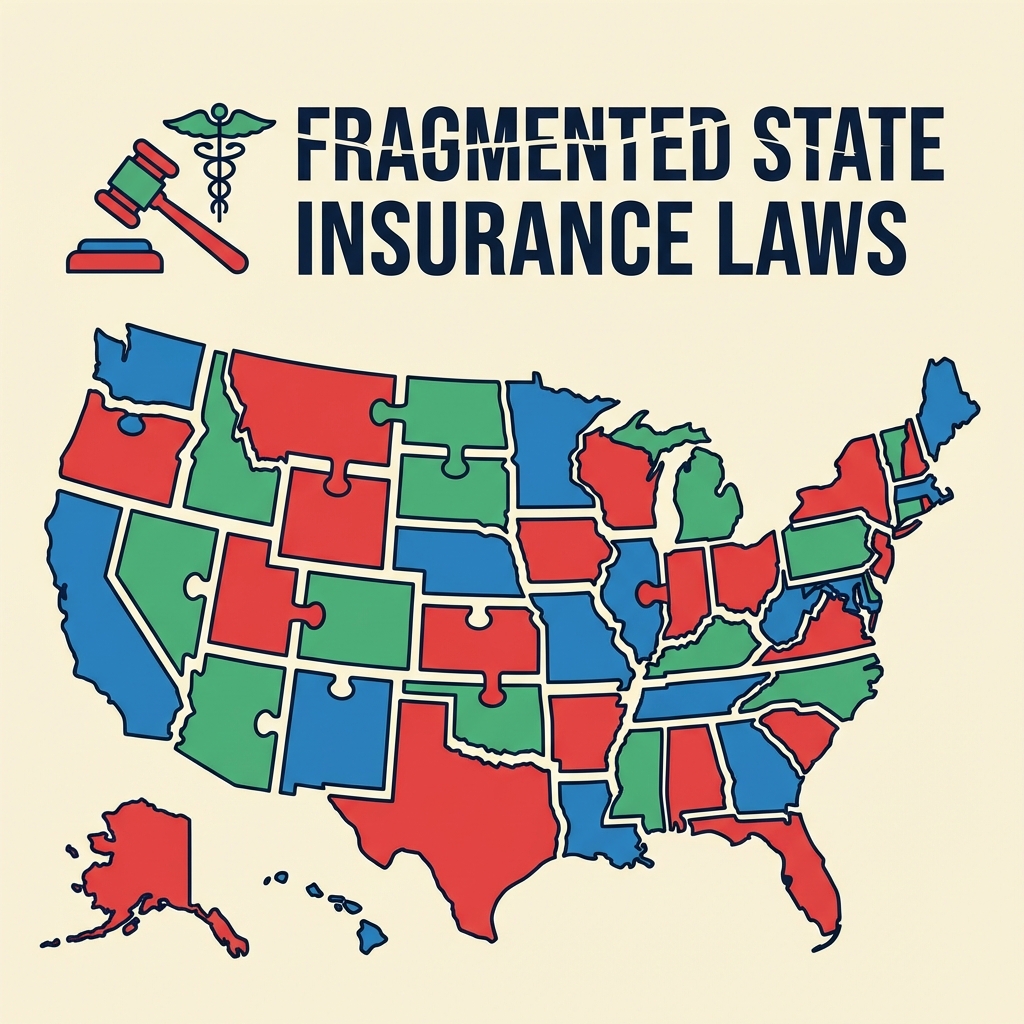
In most countries, car insurance is a national affair. In the United States, it is a chaotic patchwork of 50 different legal systems.
If you move from Ohio to Michigan, your rate might triple. If you move from Florida to North Carolina, it might drop by half. Why? It comes down to two main legal frameworks: Tort vs. No-Fault.
1. The Two Legal Systems
The "Tort" System (Most States)
Examples: California, Texas, Ohio, Georgia.
How it works: If you cause a crash, you (and your insurance) are
responsible for paying the other person's medical bills and car repairs.
Result: Rates are generally lower because the "at fault" driver pays.
However, lawsuits are common to determine who is at fault.
The "No-Fault" System (12 States)
Examples: Florida, Michigan, New York, New Jersey.
How it works: If you crash, it doesn't matter whose fault it was.
Your insurance pays for your injuries, and the other person's insurance pays
for theirs. This is called Personal Injury Protection (PIP).
Result: Rates are significantly higher (especially in Michigan and Florida)
because insurance companies have to pay out on almost every claim, regardless of liability.
2. Minimum Coverage Requirements
Every state sets a "minimum" amount of liability you must buy. These limits are often shockingly low.
- California: 15/30/5 ($15k per person, $30k per accident, $5k property). This is dangerously low. If you hit a Tesla, $5,000 won't even cover the bumper.
- Maine/Alaska: 50/100/25. Much higher minimums, which protects everyone better.
- New Hampshire: $0. Yes, really. In the "Live Free or Die" state, car insurance is not mandatory if you can prove you have assets to pay for a crash yourself. (Don't do not recommend this).
3. Other Factors That Vary by State
Credit Scoring Bans
In California, Massachusetts, Hawaii, and Michigan, insurance companies are legally banned from using your credit score to calculate your rate. In all other 46 states, a bad credit score can double your price.
Uninsured Motorist Rates
If you live in a state where 20% of drivers are uninsured (like Mississippi or Florida), your rates will be higher because you are essentially subsidizing them through your "Uninsured Motorist" coverage.
Conclusion
When you move, don't assume your current insurance company is still the best choice. Some carriers (like Erie or Wawanesa) only operate in specific regions and offer unbeatable rates there. Always shop around 30 days before your move.